I believe it could be and should be. That’s why I have been campaigning for better school food for YEARS! One part of this is updated School Food Standards and monitoring of their compliance.
I have been working on a pilot of these standards and now the proposals have been released to consultation.
Here is my feedback on what is proposed. I have shared this in the consultation. Please do share your thoughts too.
Breakfast
I think it is really good to have a separate section about breakfasts. This provides clarity.
Overall I’m very positive but I don’t understand why savoury spreads need to be limited (or is that just butter and margarine being limited)? Why are fried potato foods singled out, surely it should be all fried starchy carbohydrates are an issue if fried potato foods are an issue? I am really positive to see a removal of processed meat, fried foods, high sugar and sweeteners
In my opinion, breakfast should include a portion of dairy or fortified alternative as well as a portion of fruit. At the moment the standards just look like dairy is an option.
I would love to see just milk, water and fruit juice served – or diluted fruit juice so children still get their 150ml juice (1 portion of fruit).
Lunch
Starchy foods
I welcome the move to higher fibre starchy carbohydrates e.g. wholemeal pasta. There is clear evidence that children aren’t eating enough fibre. Wholegrain options are recommended on the Eatwell Guide so they should be what is provided at school to be consistent with messages to children and get them familiar with these foods.
I think the requirement to have 3 different starchy foods needs clarification though. This might be misinterpreted to mean it is ok to have bread, pasta and couscous as the 3 different ones when in fact they are all wheat. In addition, just having 3 different ones across the menu doesn’t mean children will get variety, there need to be points in the week when children can’t have wheat for example and have to choose a different starchy carb – there are plenty of options; potatoes, rice, quinoa, yam, cassava, plantain to name a few.
Cheese
In the proposed standards, cheese can only be served as a main ingredient twice a week. I think this is ambiguous and open to misinterpretation, e.g. is cheese a main ingredient of lasagne or shepherd’s pie? This needs to be clearly stated. Perhaps saying cheese can only be served 2 days a week would be clearer. I back the reduction in cheese as it is fairly high in salt and some children end up having it every day, so reducing the variety of foods they have.
Pulses
I think this is long overdue to include more pulses on the menu. I am a supporter of the Bang in the Beans campaign and there are lots of innovative ways to include these nutritious foods. Schools may need support with this and children with allergies need to be given foods which have the equivalent level of nutrition, particularly fibre, protein and iron on the ‘pulses day’.
Proteins
So many parents have told me the vegetarian offer at their school is just cheese or processed vegetarian proteins so the proposed changes to increase variety are really positive. Children may need support to try new foods but this is a welcome change.
Taking another protein, I was disappointed to see that oily fish requirements had n ot changed. I believe oily fish should be on the menu in the same way as pulses – ie in all the main meal choices (aside from one vegetarian option of course, which should include an omega 3 rich source of food on that day). This should be every week. Oily fish consumption is low and this has a detrimental impact on brain and heart health. We know that oily fish consumption is low across the UK and so we cannot rely on families serving it at home for the other 2 weeks when they currently don’t have it on the menu. Far too many menus also hide oily fish on their menus or serve it as an alternative to a really popular option so it needs to be more prominent to help promote consumption.
Dessert
It is proposed that primary schools should have at least one day a week where fruit is the only dessert option. In my opinion, we need to be careful that children get enough food at lunchtime. I would like to see this change to fruit and unsweetened yoghurt are the only option. I would like to see fruit served with all dessert options, not as a separate option too.
I fed my children well whilst they were at home with me. They didn’t have sweet puddings with the childminder, only fruit and plain yoghurt. When they started school age 4 they suddenly went to having a large portion of sweet pudding every day. We then had struggles at home because they learnt to expect a sweet thing with every meal. Some of the desserts they had, had well over the daily recommendation for sugar, which we knew because the school shared the recipes to try at home!
Children don’t need this amount of sugar. Lots of children in secondary schools have braces and are told to avoid having lots of sugar but it comes with school. Children suddenly have free choice at secondary but they don’t have the real skills to choose well when the offer presented to them is not balanced. Children have plenty of free sugar outside school, they don’t need more in school which will damage their teeth, increase risk of disease and cause post sugar slumps. I am very positive about a reduction in sweet desserts. One thing to consider though, is that portion sizes of the main meal will need to be larger to give children enough energy and nutrition from their savoury course.
Proposed list of permitted drinks
I think we should not have sweeteners in children’s drinks at school. There is no need to have anything other than water, milk or 100% fruit juice/vegetable juice. Drinks which include 150ml fruit juice in water should be permitted – eg 300ml bottle which is half and half to support children who have limited fruit consumption. Schools should place a limit on the latter though – 1 per day per child. The rest is just a commercial enterprise at the expense of children’s health.
I think the proposed gradual change is good but it does not go far enough in September 2028. There is strong evidence that caffeine is not positive for the under 16s so tea and coffee should not be permitted in schools. Tea and coffee also affect the absorption of iron – a nutrient which is already problematic in teenagers, especially girls (NDNS data).
The list of drinks permitted in my view should be the same for primary and secondary schools ideally but I think the inclusion of fruit juices and 50/50 fruit juice/water drinks is beneficial in a secondary school environment when many children don’t drink enough because of the issues around secondary school toilets. We need to be careful not to have dehydration and all it’s health risks as an unintended consequence. There is room for much more work to be done with teenagers and schools to understand the challenges and solutions around fluid intake in school.
Meal deals
I don’t understand why a meal deal can’t include a drink, as the proposals suggest. It should. A drink is an important part of a meal. If you take it out, children might not drink enough. We can’t rely on secondary school children being happy to use water fountains or drinks stations which are often deemed unhygenic.
I therefore think the meal deal should include:
- a savoury main – eg a sandwich
- a portion of vegetable
- a portion of fruit or fruit juice
- and a drink (not if a fruit juice is chosen)
Practical challenges
The change in standards is only part of the story. There is SO much work to be done to get children’s diets at school to be where they should be. We have a lot of years to unpick and there are many hearts and minds to be won. Here are a few of the practical challenges I foresee:
- Needing to move to alternative cooking methods so needing other equipment – e.g. chips might now need air fryers. One caterer asked me how they would cook a couple of hundred kilos of chips without a deep fat fryer.
- Supply chains may not have the products required – e.g. yoghurts with no sweeteners, wholegrain products in all the forms e.g. naan, macaconi, pizza bases. I hope manufacturers will meet the demand.
- How do we support pupils who have very limited diets?
- There will be parents who are not on board. This is a journey for parents too. They might need to be supported to eat well as well.
- We need communication with staff so they understand why these changes are necessary.
- There will be an increase in costs if not given the correct support.
- Children not having lunches which could impact money coming in. School food is a commercial entity which is wrong. I would like to see this change.
- Schools may need access to recipes and nutritionist support to help navigate these changes.
Steps schools should take
- There are many schools serving really good food. Going forward I think it is important for schools to have a published menu and then a requirement for governor spot checks to be done to ensure the menu is being served. Lots of schools have a great menu but that’s not what children are being served.
- Schools cooks should be required to discuss their menu with a Registered Nutritionist employed by the council who is trained to spot issues and support the schools. It is not enough for it to happen at the catering company level.
Steps government should take
- Have a clear system for checking. This can’t just be looking at a written menu. It needs to include actual checks – eg photos sent of the food service on spot check days.
- The menus don’t show all the information – e.g. whether cheese or pulses are included, or whether puddings have 50% fruit/veg. It also doesn’t show the cooking methods. Someone needs to actually check the recipes.
- Provide an effective funding model for school food and ringfence school meal funding.
Environmental cost
There is great opportunity for positive impact on the environment when it comes to school food. Increased fruit and veg could be positive if using UK grown, in season vegetables/fruit – but could be negative if not in season. The reduction of processed food is positive for the environment. Schools need to work with children to reduce food waste though as this could be detrimental. And from a packaging standpoint, in the grab and go sector, reusable options for portions of veg and fruit are needed to reduce impact of packaging, and reusable container options for drinks should be considered.
Further comments
These changes are long overdue. They are ambitious and require funding to make them work. The funding formula needs updating to support schools with small intakes of children. We also need funding to support work with children.
The work with children needs to start in the early years. The packaged food items, eg snack items and pouches need to be better regulated as they have added to an increase in picky eating. This needs to change.
Teenagers need to work with caterers on the implementation AND no one should be able to make a profit from school food.
To have your say on school food in England please share your views on the consultation.
If you want to find out more about the work I do and have done on school food, please get in touch
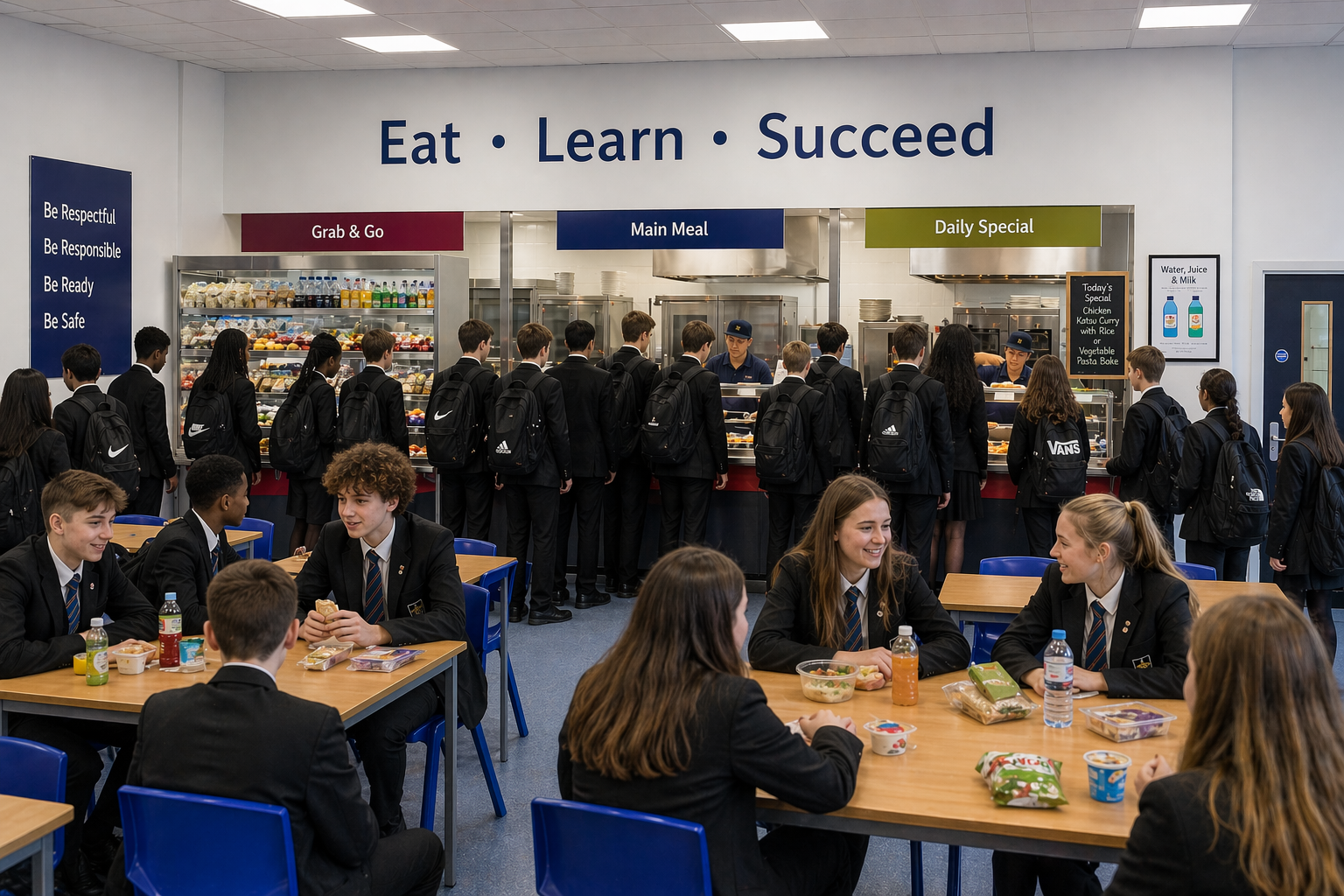
Image generated by Chat GPT April 2026