
Constipation leads to thousands of hospital admissions every year. Women who are pregnant or have recently given birth are at increased risk. Constipation can lead to discomfort, not wanting to eat, increased urgency going to the toilet, increased risk of piles (haemorrhoids) and increased risk of prolapse. It’s not an inevitable situation.
So what is constipation?
The NHS states that: “It’s likely to be constipation if:
- you have not had a poo at least 3 times during the last week or you’re pooing less often than usual
- the poo is unusually large or small and is dry, hard or lumpy
- you are straining or in pain when you have a poo
- you feel like you haven’t fully emptied your bowels
You may also have a stomach ache and feel bloated or sick.”
Causes of constipation
This is not an exhaustive list but some of the things which might cause constipation are:
- Not moving around enough – staying still for long periods and not exercising enough
- Certain medicines – iron supplements are well known for increasing the risk of constipation for example
- Not drinking enough water
- Not eating enough fibre
- Change of eating habits
- Stress, anxiety or depression
- Not going to the toilet when you feel the urge to go
Reducing your risk of constipation
- Eating enough fibre. We are recommended to eat 30g of fibre a day. This means having wholegrains at every meal, at least 5 portions (80g each) of fruit and veg a day, and some pulses each day. If you aren’t having this already, gradually increase by one portion a day to avoid bloating. There is no need to go for fibre supplements, having the food means you get all the vitamins and minerals those foods have to offer too.
- Drinking plenty of fluid. Women are recommended to have 1600ml of water from drinks each day, 300ml more if we are pregnant and 60-700ml more if we are breastfeeding. Having small sips throughout the day is better than a few big drinks. This will help keep you hydrated better and help with bladder control. You may need more water on hot days and when exercising. Check your wee – it should be pale yellow.
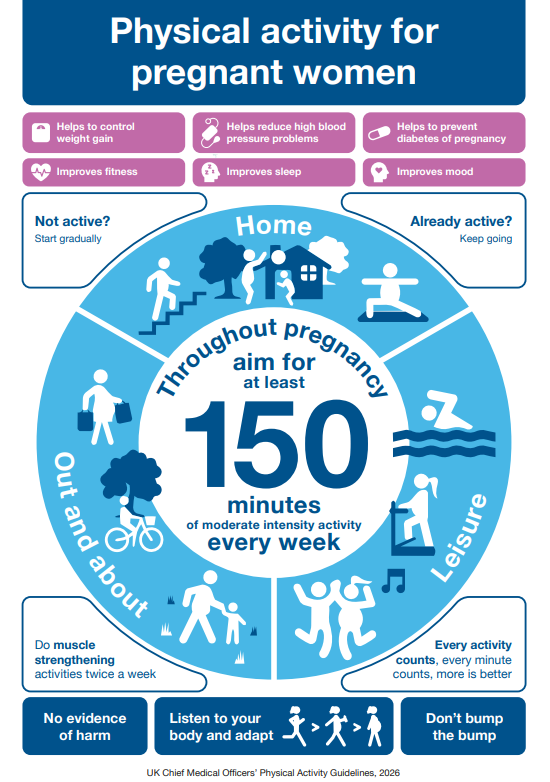
- Keep moving. You need to do what is safe for you so check with your midwife or doctor what is suitable for you. Sitting on a birth ball and moving your hips can be helpful, as well as walking and gentle movement. Below are the government physical activity guidelines – please discuss these with your medical team. If you are advised to have bed rest please do discuss reducing your risk of constipation with your midwife or doctor.
4. Go to the toilet when you feel the urge. This might sound obvious but when life is busy it is all too easy not to go when you need to. If you don’t go then that poo will get harder and harder to pass as more and more water will be removed in the bowel. If you are nervous about passing a stool, don’t strain, put a maternity pad against your underside and give your body the chance to pass it. Speak to your midwife if you are concerned about pain or the stitches.
5. Manage medication. You need the medication you have been prescribed but if you experience constipation, discuss this with your GP or pharmacist. They may be able to offer an alternative or prescribe something to reduce the constipation.
6. Manage stress. This is easier said than done but simple breathing exercises can be helpful with constipation. You may need additional support with your mental wellbeing and mental health – do reach out. You are not alone.
So what next?
Pick one of the practical steps and work on that, then work on the others. If you need more information, speak to your midwife or GP. If you want more help to improve your diet – and more practical suggestions of how to achieve these steps, do reach out for a 1-1 consultation.
Disclaimer – This article contains general advice and is not personalised advice. For personalised advice please speak to your midwife or GP, or a Registered Nutritionist or Dietitian.